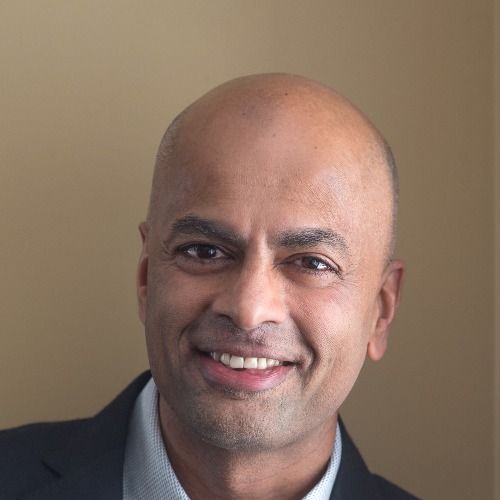
Turning Policies Into Purpose: A Guide to Charitable Life Insurance Strategies with Joseph Galli
Episode Summary
In this episode of The Future Ready Advisor, Sam Sivarajan speaks with Joseph Galli, entrepreneur and founder of a medical foundation that’s reshaping how life insurance can fund philanthropy.
Joseph shares his personal journey into charitable work, how he created a foundation to fund medical research, and how he’s built innovative life insurance donation programs that combine financial planning, philanthropy, and tax efficiency. He also dives deep into the compliance aspects of these programs, the 310 rule, and how advisors can ethically and strategically guide clients in transforming unwanted policies into charitable legacies.
This episode is a must-listen for advisors seeking to expand their value proposition and help clients make a lasting impact.
Key Takeaways
· Joseph’s philanthropic journey began with personal family health challenges.
· His foundation funds medical research through non-traditional methods, avoiding gala-based fundraising.
· Life insurance donations can unlock major tax benefits while supporting meaningful causes.
· The 310 rule enables donation of term policies not originally intended for charity.
· Compliance is critical—ethical advisory practices are key to execution.
· Advisors can help clients monetize unwanted policies, converting them into charitable receipts.
· Philanthropy should be a core strategy in financial and estate planning.
· Life insurance gives clients a unique path to leave a legacy and support medical innovation.
Episode Chapters
00:00 – Introduction to Innovative Philanthropy
03:06 – Joseph Galli's Personal Journey and Foundation
05:48 – The Need for a Holistic Approach in Medical and Financial Services
08:56 – Building Sustainable Funding Models for Medical Research
11:45 – Understanding Life Insurance Donations and Tax Benefits
15:00 – Real-Life Examples of Life Insurance Donations
17:54 – Navigating Compliance in Philanthropic Endeavors
24:17 – Navigating Financial Dignity in End-of-Life Planning
26:55 – Compliance and Family Dynamics in Policy Donations
28:37 – Identifying Ideal Candidates for Charitable Donations
30:34 – The Role of Advisors in Policy Donations
34:11 – Philanthropy as a Cornerstone of Financial Planning
36:35 – The Future of Life Insurance Donations in Financial Strategies
Sound Bites
"We only do one in five policies."
"We have an IRR that we have to meet."
"This is a problem — this is an opportunity."
Featured Quote
"This is a problem — this is an opportunity."
— Joseph Galli, on recognizing how life insurance can be repurposed for philanthropy
Keywords
philanthropy, life insurance, charitable donations, tax benefits, medical research, compliance, financial planning, estate planning, Joseph Galli, Future Ready Advisor
Transcript
Hi everyone, I'm Sam Sivarajan and welcome to the Future Ready Advisor. Today, I'm joined by Joseph Galley, an entrepreneur who's pioneering an innovative approach that sits at the intersection of financial planning, philanthropy, and regulatory compliance. Joseph has spent years developing and refining life insurance donation programs that transform policies clients no longer need into meaningful charitable legacies and creating significant tax advantages in the process. His work with the Louise Dietz Syndrome Foundation Canada represents a fascinating case study in how financial professionals can think creatively about client solutions while navigating complex regulatory frameworks. Today, we're exploring how this model works, what advisors need to know about compliance, and why this approach might represent the future of sophisticated estate and tax planning. Joseph, welcome to the show.
Joseph Galli:Good morning and thank you very much. excited to be here with you, Sam.
Sam Sivarajan:I am as well. know we talked a little bit before about what you do and how you do it, and I'm fascinated by your story and I'm sure that the audience will be as well. Maybe you can start by talking and sharing with the journey, your journey, because it's taken you into a pretty specialized niche that combines life insurance, charitable giving, and medical research funding. Can you walk us through how you got here and what sparked your interest in developing these life insurance donation programs?
Joseph Galli:Sure, thank you. So by way of background, I spent 30 years in merchant banking. So merger and acquisition, turn around and investment. And Christmas Eve 2009, four o'clock on the 24th of December, 2009, we got a call from a geneticist in Cleveland that we had been down to visit for my oldest son. And she said he was diagnosed with this rare genetic disease. He was 15 at the time and life expectancy was 27. So if you're a parent, it's like a brick house falling on you and that was Christmas Eve and then we found out shortly thereafter that our second son was 13 was afflicted with the same disease with the life expectancy of 27. So, you know, I would say if you're a parent or a grandparent, it's, you know, it's not the type of message you want to get at any time of the year. I made a decision at that point to retire that day and focus on longevity and quality of life for my boys. And that's been my mission in 2010. Started a foundation with two other families.
Sam Sivarajan:Thank
Joseph Galli:We are an atypical medical foundation. And what I mean by that is that we don't do golf tournaments, we don't do gala dinners, we don't do walks. Those are great marketing tools, but they're really poor ROI, return on investment, and very high risk. And the other thing was I recognize, and I don't come from philanthropy, I don't come from tax, I don't come from any of those spaces. So I have the benefit of being an idiot and that I can ask a lot of really simple, stupid questions. And I do have...
Sam Sivarajan:Beginner mind, not idiot, beginner mind.
Joseph Galli:I like that. I'm going to use that. Thank you, Seth. So I have a beginner's mind. and I, the one thing, one of my qualities is perseverance. I don't know when to stop. So I just keep, I fall and I get up again. And what I realized when I did an analysis, a strategic analysis of the philanthropy space is there's 85,000 charities in Canada. 20,000 are on the verge of bankruptcies at any point in time. So a quarter of the charities in Canada are in bankruptcy, know, close to bankruptcy are going out of business.
Sam Sivarajan:wow.
Joseph Galli:So the question then became, what do you need to do to be able to have a sustainable, scalable future in that environment? And our objective, we have two KPIs, performance indicators, and everything we do that's our North Star is really longevity and quality of life. So when you start to realize the nature of the beast and you realize that financially you need to have a balance sheet to survive, that's the first piece of the, this long answer to a very short question, but that's the first piece of how I started to think about this from a problem standpoint. The second piece was how do you affect change in an industry that's one siloed, so the medical industry is very siloed, not different than financial services in many regards. If you think about it, the accountant doesn't talk to the tax person who doesn't talk to the lawyer who doesn't talk to the estate planner. The orthopedist doesn't talk to the cardiologist who doesn't talk to the geneticist who doesn't talk to who doesn't talk to. So you have the same dilemma.
Sam Sivarajan:Mm-hmm.
Joseph Galli:So the question then became, if you're dealing with specialists that are an inch wide and a mile deep, which is what you want, you don't want somebody that's gonna be an inch deep and a mile wide to look after your child or your patient. The issue then is these are the smartest people in this space. If you think about it, in the world, these are the smartest people here. Over here and over here, they're not smart. And I tell them that to their face and a lot of them become friends and they look and say, you're 100 % right. And if you think about it, Sam, the things that we do in our sleep without even thinking about networking, collaborating, problem solving, putting a plan together and executing, building a team, that's not their specialty. That's not their forte. So the question then became, how do you take these people that are siloed, put them into a holistic multidisciplinary approach, and then bring around them all the expertise that you and I do in business every day?
Joseph Galli:And so that was the foundation, philosophically for the foundation. That was the fundamental component of how we look at the world. we see ourselves as innovative leaders, which means we're not afraid to get out and actually do what has to be done to make a project work and not just give money, but our other currencies. We have three currencies. We have cash, which we finance. have GTD, so getting things done. So we bring all the resources to the table to get something done.
Sam Sivarajan:Mm-hmm.
Joseph Galli:And then the third part that we bring is relevancy. And what I mean by that is that you're a researcher, only 10 % of research gets funded. You essentially go and spend a lot of, 30, 40 % of your time on grant applications. So you're sitting in a computer putting together a grant, which is a terrible use of your time because you're brilliant and you should be doing research or patient involvement or surgery. So.
Sam Sivarajan:Right, right.
Joseph Galli:If you think about it, when you go to apply for a grant, the first question they're going to ask or they're going to look at, Sam, is they're going to say, your research on XYZ, what's the impact on the patient population? And in general, you're going to answer, well, I think it will do this. I hope it will do that. If you partner with us, we'll be able to one, fine tune your into a laser focus what the impact is on the patient population. And number two, we can bring to the table the expertise of the patient access.
Sam Sivarajan:Right.
Joseph Galli:and we can bring those patients and data to the table. So what I've just done is I've increased your probability of getting funded, Sam, okay, in a very, very competitive world. So I'll give you a couple of examples of this. We've built the first registry for pediatric connective tissue in Canada, and they've been trying to do that for 20 years. And four years ago, we took on the project and we have all the experts lined up and then we brought all the expertise around the table. And why that's important is that with parental permission and consent, if we take a child's data and put it into this database from birth until now, and then every time they come, we essentially put their data into the database, I can now look at the longitudinal progression of your child's health. So from a research standpoint, you're a researcher, you come to me, say, Joe, need data. And think about data, and think about a car and gasoline. Researchers are cars, their gasoline is data.
Sam Sivarajan:Mm-hmm. Mm-hmm.
Joseph Galli:whether it's donation of a policy now, it doesn't matter, they should be doing something from that standpoint. Our opportunity is, if you look at the demographics where people are getting older in Canada, there are 22 million Canadians, this comes from CHLA's Factbook again, there's 22 million Canadians with life insurance policies. They're getting older. Every single advisor has that in his or her book. So why not monetize those, where people think of us as a niche product, we're not a niche...
Sam Sivarajan:Mm-hmm.
Joseph Galli:we're actually very broad market because it affects every one of their clients at some point in time or another. But so to answer your question, philanthropy should be a cornerstone of their financial planning strategy.
Sam Sivarajan:And this kind of life insurance donation as an element of that charitable or philanthropic element, where do you see that playing as going forward?
Joseph Galli:Well, think of it as a toolkit. This is one of the tools you have in your toolkit, which is when you think about life insurance in the philanthropy environment. I think it's probably the largest of the tools. Because if you think about your cost versus your benefit of a life insurance policy either being taken out and donated or donated an existing policy, the impact for the recipient, which is the charity, is ginormous. It's huge. Versus the cost of what's involved in that. So it...
Sam Sivarajan:you
Joseph Galli:It's actually a mainstay, life insurance donations, our program or others, is a mainstay, I think, of the philanthropy strategy for an advisory community.
Sam Sivarajan:And the way you've described it, if I'm not oversimplifying it, it sounds like it's a win-win situation. It's a win for the end client in the terms of the tax receipt that they get. It's a win for the advisor in terms of the conversion premium or the AUM that they might get. Not to mention how they're helping solve a client issue, that they're for unwanted or unneeded policies. And it's a win for the charity in terms of receiving donations to fund their very important work.
Joseph Galli:Yep, it is for sure. There's no downside there. It's a win all around.
Sam Sivarajan:Joseph, this is very interesting. We're coming to the end of our podcast. So I will ask you a few rapid fire questions that I ask all my guests if you're ready. So the first is professionally, what is the most important lesson you've learned over the years?
Joseph Galli:Excuse me. Yep, shoot. Perseverance.
Sam Sivarajan:100%. I think nothing that is worth doing. You can get to your goal at the with your first try with your first crack at the can, right? So I can only imagine what you've had to do between 2009 to to now where you are in terms of, perfecting this model and and bringing it out to more to the masses.
Joseph Galli:You can't.
Sam Sivarajan:Number two, what is one practical tip that you would offer listeners keen on applying your insights?
Joseph Galli:Okay, so this is something I've done with my kids, all my staff, all my business partners. This is a problem, okay? This is an opportunity. It's the same hand, it's two sides. We're trained to stop at the problem, okay? And the question, the thing that I ask everybody when they have a problem is I say, okay, did you ask the question, Sam, what's the opportunity? Because in every problem, it's the genesis, it's the raw material for that opportunity. Same hand, but we stop here.
Sam Sivarajan:Mm-hmm. That's a great way of looking at it. And it's a hundred percent right. mean, it's, know, we do stop and think that this is insurmountable. There's always a way around the problem. You just have to kind of, take a beat, step back and try to look at it from different angles and see, what you can do out of it, but you're a hundred percent right. think there's actually an ancient Chinese saying that basically that within every problem is an opportunity. This Chinese symbol, problem and opportunity are apparently the same.
Joseph Galli:It's actually, if you look at the Chinese symbol, it's danger and opportunity are the same symbol, right? It's this. And it's really interesting because there's something else that happens. The neurochemistry in your brain changes. If you look at things from a problem standpoint, you generate a certain chemistry. If you look at things and say, what's the opportunity, you generate a different chemistry sample in your brain. And your ability to then overcome that is because you've generated this
Sam Sivarajan:Okay. Hmm.
Joseph Galli:Positive chemistry as opposed to this negative chemistry and it's the most fascinating thing when you look at it from a neuroscience standpoint So in summary, this is the problem. This is the opportunity we stop here I challenge everybody on this podcast that has the people around them and say Sam. What's the opportunity in this situation?
Sam Sivarajan:It's a great reminder, Joseph. Look, this has been a great discussion and I've learned, I've certainly learned a lot. If listeners want to learn more about you or the Louise Dietz Syndrome Foundation, where should they go?
Joseph Galli:So we have a website, it's loeysdietzcanada.org, loeysdietzcanada.org. You've got everything there about the disease, how we provide patient support. We have a whole bunch of programs I didn't talk about, but they can go and find out about it there. You'll see all of our business partners, which are all of the, pretty much every major hospital institution across the country is one of our business partners or one of our medical research partners. I'd say that. Give me a call. very, you know, I work seven days a week. This is not a job. This is a mission. As a lot of the advisors, get calls on weekends from them. Call me on my cell. Happy to chat. If I'm not returning the calls, because I'm in an airplane and I'm not allowed to call you back. Otherwise, I will call you back on a Saturday or Sunday. So not a problem.
Sam Sivarajan:Yeah. Awesome. Joseph, thank you very much for joining us today on the Future Ready Advisor.
Joseph Galli:Thank you very much for the opportunity and great to everybody. Good luck with this.